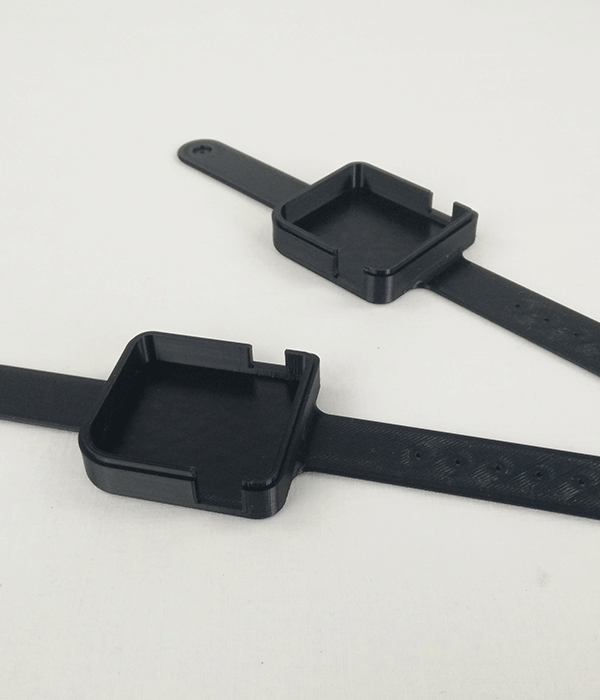
Size: 200mm x 45mm x 20mm
Material: TPU (flexible)

Size: 75mm x 75mm x 90mm
Material: PETG
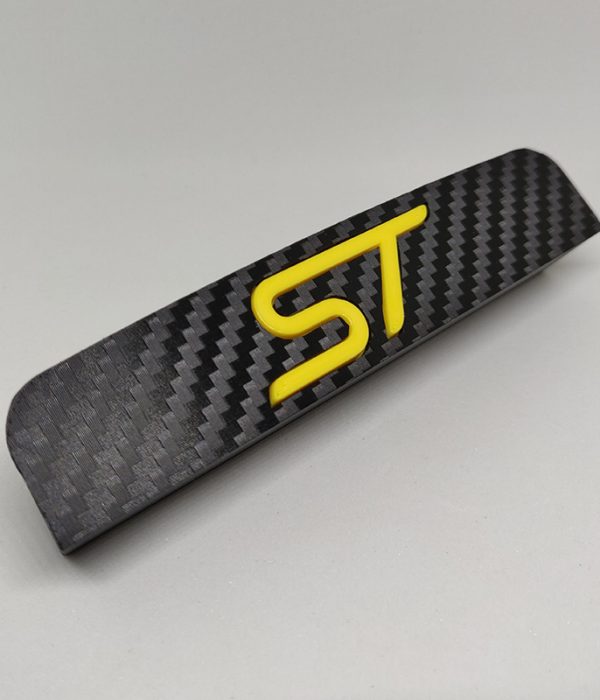
Size: 120mm x 25mm x 15mm
Material: PLA (Carbon Fibre vinyl wrapped)
Fused Deposition Modelling (FDM):
Overview: Fused Deposition Modelling (FDM) is a material extrusion 3D printing process. During this process, the printer builds a part by depositing molten material layer-by-layer. The distance between each layer is referred to as the ‘resolution’. Generally, the higher the resolution, the higher the number of layers and the better the surface finish of the part. Because of its versatility and affordability, FDM 3D printing is one the most common processes. Moreover, FDM 3D printing produces a variety of functional parts in a range of materials.
Materials: We print with PLA, PETG, ABS, and flexible TPU. Additionally, we can source other materials on request, so please get in touch to discuss the specific requirements of your project.
Common applications: Typically, FDM 3D printing is used to create functional prototypes, fixtures and jigs, casting patterns (for investment casting), housings and casings.
Is FDM right for my project: Choose FDM when function and cost are more important than surface finish. FDM can create strong and functional parts in a range of engineering plastics. Expect visible layer lines on parts produced by FDM, these will be more noticeable in areas of high curvature.
Should I consider SLA: SLA should be used for producing parts with high curvature or with small, intricate details. Compared to FDM, SLA provides a smoother surface finish, and layer lines are nearly invisible. On the other hand, SLA is more expensive than FDM and parts will be less strong and durable. For more details, check out our SLA Printing Service page for more details.
Get in touch to tell us a little bit about your project and we’ll be happy to offer fast and free advice.